

How to Choose a Car Air Compressor — Compact Size, Power, and Accurate Pressure for Safer Roads
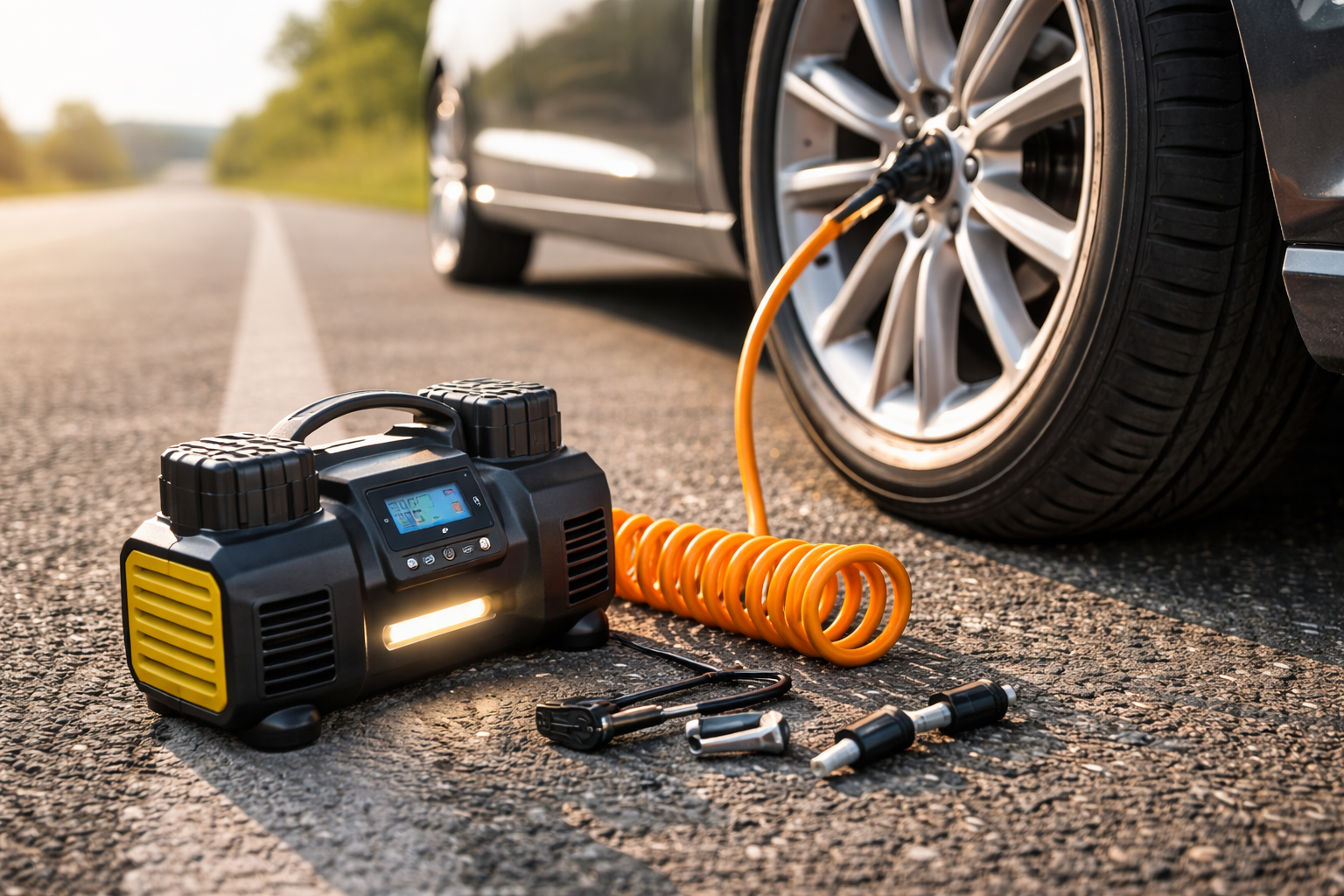
A reliable car air compressor is one of the most practical tools a driver can keep in the trunk. Whether you face an unexpected pressure drop on a road trip or simply want to maintain optimal tire pressure for fuel efficiency, the right compressor saves time, money, and stress. Choosing one, however, requires more than grabbing the first compact device on the shelf. Understanding compactness, power output, and the quality of the pressure gauge (manometer) ensures you invest in a tool that truly supports safe driving and fuel economy.
Why Tire Pressure Matters More Than You Think
Before selecting a compressor, it is important to understand why maintaining correct tire pressure is essential.
Underinflated tires:
- Increase rolling resistance
- Reduce fuel efficiency
- Wear unevenly
- Overheat more easily
- Compromise handling and braking
Even a small pressure drop can increase fuel consumption by several percent. Over time, that translates into significant fuel costs and additional emissions. Proper inflation also extends tire lifespan, reducing replacement expenses.
Having a compressor available allows drivers to correct pressure immediately instead of driving to the nearest service station.
Compactness: Convenience Without Compromise
For everyday drivers, portability is critical. A car air compressor should be compact enough to fit comfortably in a trunk compartment or under a seat without taking up excessive space.
When evaluating compactness, consider:
- Weight and dimensions
- Integrated storage for cables and hose
- Carry handle or case
- Cord length
A compact model does not mean weak performance. Modern compressors are designed to balance portability and efficiency. Look for models that store neatly but still offer sufficient airflow for standard passenger car tires.
For road travel, camping, or long-distance trips, smaller units are easier to transport and access quickly in emergencies.
Power and Airflow: Performance That Matches Your Needs
Power determines how quickly a compressor can inflate a tire. It is usually measured by:
- Maximum pressure (PSI or BAR)
- Airflow rate (liters per minute or cubic feet per minute)
For most passenger vehicles, a compressor capable of reaching at least 100–120 PSI is sufficient. However, maximum PSI alone does not indicate efficiency. Airflow rate determines how fast the tire fills.
Higher airflow:
- Reduces waiting time
- Prevents overheating during longer use
- Improves reliability
If you drive an SUV, van, or light truck, choose a compressor with stronger airflow capacity. Inflating larger tires with an underpowered unit can lead to overheating and slower performance.
Duty cycle is another important factor. This refers to how long the compressor can operate before needing a cooling break. For roadside tire adjustments, short operation time is usually enough, but higher duty cycles offer better durability.
The Importance of an Accurate Manometer
The manometer, or pressure gauge, is one of the most critical components. Inaccurate readings defeat the purpose of carrying a compressor.
There are two main types:
- Analog (needle-based) gauges
- Digital displays
Digital gauges are often easier to read, especially at night. Many modern compressors include automatic shut-off features that stop inflation once the desired pressure is reached. This prevents overinflation and reduces guesswork.
Look for:
- Clear display visibility
- Backlit screens for low-light conditions
- Small measurement increments for precision
Accurate pressure ensures better fuel efficiency and safer handling.
Power Source: 12V or Battery-Powered?
Most portable compressors connect to a vehicle’s 12V cigarette lighter socket. These are practical for road use and require no charging.
Battery-powered models offer additional flexibility but must be kept charged. Some advanced units provide both options, offering versatility in different situations.
For emergency roadside use, a 12V model ensures power availability as long as the vehicle battery is functional.
Additional Features That Make a Difference
Modern compressors may include helpful extras:
- LED lights for nighttime emergencies
- Multiple nozzle attachments (for bicycles, balls, inflatables)
- Anti-vibration feet
- Thermal protection systems
While these are not mandatory, they improve convenience and safety.
Fuel Efficiency and Long-Term Savings
Proper tire pressure directly impacts fuel consumption. When tires are underinflated, the engine works harder to move the vehicle. Over time, this increases fuel usage and accelerates tire wear.
A personal air compressor enables regular pressure checks at home, encouraging consistent maintenance. This habit reduces fuel costs and extends tire life.
Small maintenance efforts produce long-term financial benefits.
What to Avoid
Avoid compressors that:
- Overheat quickly
- Provide inconsistent pressure readings
- Have extremely short cables
- Lack basic safety features
Extremely low-cost options may seem attractive but often sacrifice durability or accuracy.
Making a Smart Choice
When choosing a car air compressor, balance compact design with reliable power and precise pressure measurement. A well-selected unit becomes an essential travel companion, especially for long trips or remote routes.
Reliable inflation on demand means safer driving, better fuel efficiency, and peace of mind. A compact yet capable compressor is not just a convenience — it is a practical investment in road safety and vehicle performance.
With the right model stored in your trunk, you are always prepared to maintain optimal tire pressure wherever the road takes you.